 [5]
[5]
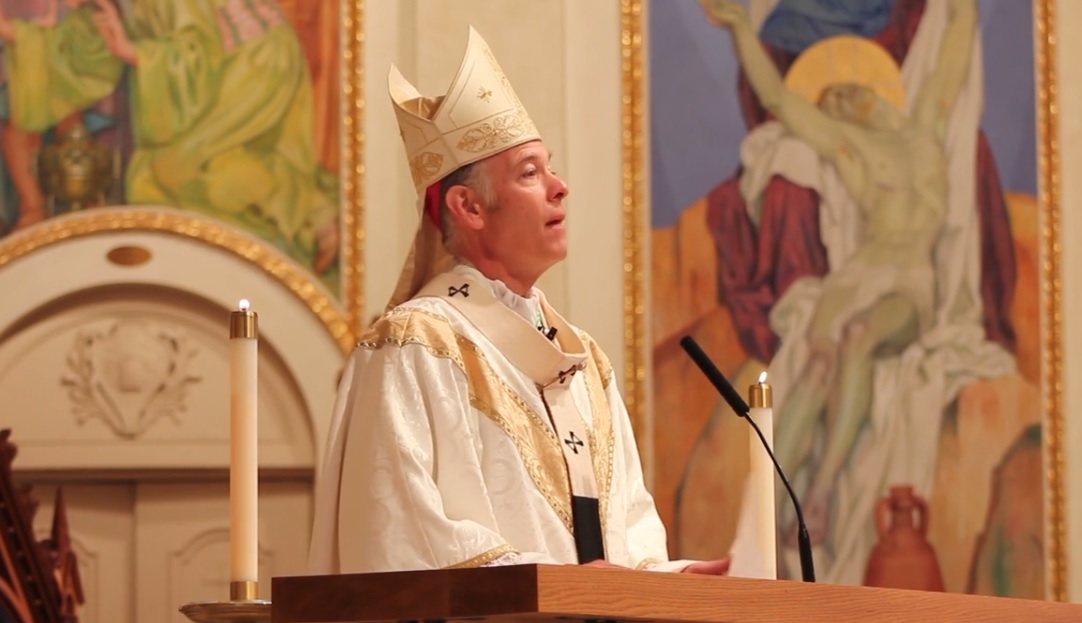
Pastoral Letter: “Go therefore and make disciples of all nations”
Archbishop Alexander K. Sample
Portland Archdiocese [6],
October 1, 2026
.
I have always believed that it is very important to pay close attention to the words of Jesus at the very beginning and end of his public ministry here on this earth. To me these are defining moments in the life of our Lord and have much to say to us about our mission as the Church.
The first words of Jesus at the beginning of his public ministry speak of the need for repentance and belief in the Gospel, for the Kingdom of God is at hand. In St. Matthew’s Gospel, we read that after his temptation in the desert, “Jesus began to teach, saying, ‘Repent, for the kingdom of heaven is at hand.’” [4] St. Mark’s Gospel records that “Jesus came into Galilee, proclaiming the gospel of God, and saying, ‘The time is fulfilled, and the kingdom of God is at hand; repent and believe in the Gospel.’” [5]
What is this Gospel that Jesus proclaims and in which he calls us to believe? I believe it is summarized succinctly in St. John’s Gospel:
For God so loved the world, that he gave his only Son, that whoever believes in him should not perish but have eternal life. For God did not send his Son into the world to condemn the world, but in order that the world be saved through him. [6]
Jesus also said, “I came that they may have life and have it abundantly.” [7] The fulness of this abundance is eternal life. This is the message we proclaim to the world. This is the mission of the Church which must be renewed in this time.
At the end of his public ministry and before his ascension, Jesus gave what might be called his “marching orders” to the Church. St. Mark’s Gospel records Jesus telling the Apostles to “Go into the world and proclaim the gospel to the whole creation. Whoever believes and is baptized will be saved, but whoever does not believe will be condemned.” [8]
In St. Luke’s Gospel, Jesus tells the Apostles:
Thus it is written, that the Christ should suffer and on the third day rise from the dead, and that repentance for the forgiveness of sins should be proclaimed in his name to all nations, beginning in Jerusalem. You are witnesses of these things. [9]
Perhaps the clearest expression of this is from St. Matthew’s Gospel. Jesus came to the Apostles and said:
All authority in heaven and on earth has been given to me. Go therefore and make disciples of all nations, baptizing them in the name of the Father and of the Son and of the Holy Spirit, teaching them to observe all that I have commanded you. And behold, I am with you always, to the end of the age. [10]
To me, this could not be clearer, as all these words come from the mouth of our divine Savior himself. Our mission as a Church, a mission that needs to be renewed in our days, is to proclaim this Good News of God’s mercy upon the world, calling God’s children to repentance for the forgiveness of sins, bringing others to the saving fount of baptism and into the Mystical Body of Christ, and constantly reminding people of all that Jesus taught us. This is the Great Commission Jesus has given to us, his Church.
Many may not know that I did post-graduate studies and obtained a degree in Canon Law (the law that governs the Church). I have always been struck by the very last canon (law) in the Code of Canon Law. It reminds us all that “the salvation of souls, which must always be the supreme law in the Church, is to be kept before one’s eyes.” [11] This is what the Church is all about: the salvation of souls. In other words, we are to minister the salvation of Jesus Christ, won by his death and resurrection, to the people of our time, doing our part to help bring them to eternal life in the Kingdom of Heaven.
St. Maximilian Kolbe put it this way:
The most resplendent manifestation of God’s glory is the salvation of souls, whom Christ redeemed by shedding his blood. To work for the salvation and sanctification of as many souls as possible, therefore, is the preeminent purpose of the apostolic life. [12]
Just as the Apostles and the early Christians were his witnesses of these things, so are we in this time. In the words of Pope Francis, we are called to be “missionary disciples” to the world, and especially here in Western Oregon. Pope St. John Paul II said that the New Evangelization is “new” in its fervor, methods and expression. We must be prepared to take up this mission with renewed clarity, passion, intentionality, fervor and zeal.
STARTING WITH US
To be up for this task, we, the disciples of Jesus, must be renewed in our own discipleship. To be “missionary” disciples, we must first be dedicated, authentic, intentional and fervent disciples in our own lives. There is a Latin phrase, nemo dat quod non habet (no one can give what they do not have). So, mission renewal has to start there, with all of us. Remember the words of Pope St. John Paul II quoted above: “Our witness, however, would be hopelessly inadequate if we ourselves had not first contemplated his face.” [13]
We must together contemplate once again the Face of Christ. We must allow ourselves to be transformed by being immersed in the grace and mercy which flow from the Sacred Heart of Jesus in order to disperse that love of Jesus to the world around us. All I have said here is what I mean by “Mission Renewal.” Now is the time. As we often hear, “If not now, when? If not here, where? If not us, who?” So, my dear brothers and sisters, let it be so.
PART II: A RENEWED PRESBYTERATE
Every year at the Chrism Mass, just before we enter the Sacred Triduum of the Lord’s saving Passion, Death, and glorious Resurrection, when we commemorate his institution of the Eucharist and the Holy Priesthood, the Bishop addresses his priests after the homily in these words:
Beloved sons, on the anniversary of that day when Christ our Lord conferred his priesthood on his Apostles and on us, are you resolved to renew, in the presence of your Bishop and God’s holy people, the promises you once made? [14]
And the priests together respond, “I am.”
And so, I now turn to you, my beloved sons and brother priests, to ask you to make that same commitment regarding our common work of Mission Renewal.
IN PERSONA CHRISTI CAPITIS
“The priesthood is the love of the heart of Jesus.” [15] These are words spoken by the patron saint of parish priests, Saint John Mary Vianney. A priest’s life and ministry are meant to be a genuine reflection of the love and mercy that flow from the Sacred Heart of Jesus. The Lord put it on my heart several years ago that the work of renewal will be ineffective if it does not start with his priests. They must be the leaders of this effort, in communion with their Archbishop and the people entrusted to their care.
Recently, on my annual retreat, when I was deep in prayer, the Lord once again put it on my heart: “It’s not complicated. It’s quite simple. Start with your priests!” Therefore, I have made a conscious decision to “pour into” the priests that he has placed under my care as partners in the work of the Church and in the work of mission renewal. They are my principal collaborators in my ministry as your Archbishop. The Church teaches that the bishop is to be a father, brother, and friend to his priests. I want this to be more than mere words; I want it to be a lived reality. I am weak and have many faults, but I am trying to give this my best effort. As such, everything I say below concerning priestly renewal I say first to myself as the pastor and spiritual father of this Archdiocese. My sincere prayer is that all of us together will respond to this invitation to renewal.
I now address myself to you, my dear priests and pastors. Why are you so essential to our mission as a Church? There is an expression that helps capture this: “As goes the head, so goes the body.” This phrase implies that the mindset, choices, and character of a leader—the head—will inevitably influence the culture and actions of the organization—the body. This is particularly true of the priest in his leadership of the parish community. By the Sacrament of Holy Orders, the priest is sacramentally configured to Christ, the Head of his Body, the Church. There is an important Latin phrase that expresses this theological and spiritual reality. The priest ministers in persona Christi capitis (“in the person of Christ the Head”).
Dom Jean-Baptiste Chautard, in The Soul of the Apostolate, made this point more bluntly:
If the priest is a saint, the people will be fervent; if the priest is fervent, the people will be pious; if the priest is pious, the people will at least be decent; if the priest is only decent, the people will be godless.
These are strong words, but they make a profound point.
My goal is to work with you, the priests of our Archdiocese, to bring about a true renewal of our presbyterate—the collective body of priests. But what exactly do I mean by “renewal” in the context of our priests? I am thinking primarily of three things: 1) our personal holiness in our priestly life and ministry; 2) our fraternity and communion with one another; and 3) our complete unity in the mission before us in our time.
PERSONAL HOLINESS
The first and most fundamental dimension of this renewal is personal holiness. After spending the night in prayer on the mountain, Jesus came to the disciples and, from their number, chose the Twelve Apostles. [16] This was surely one of the most important things that Jesus did during his earthly life. These were the men to whom he would entrust his Church, to lead it and guide it in his name. He associated the Twelve with himself in a special way, forming them personally to carry on his saving mission to the world. No one besides his Most Holy Mother Mary and St. Joseph knew Jesus more intimately and personally. They came to love Jesus deeply and profoundly, entering into his very heart.
I have often reflected on the time that the Apostles were able to spend with Jesus. We have the moments recorded in the Gospels, but added together, they reflect only a small fraction of the total time the Apostles spent with him during his three years of public ministry. I often ponder the time Jesus simply spent with them in deep and intimate friendship, prayer, and conversation—time not recorded in the Gospels. These moments of intimate communion helped the Twelve truly come to know the mind and heart of their Teacher, Master, and Lord. This was so that they could one day lead others into the intimacy of that Sacred Heart.
The bishops of our Church are the successors of the Apostles. As the bishops carry on the mission entrusted to the Apostles by Jesus, they associate with themselves their principal co-workers in the vineyard, the priests. I have long maintained, therefore, that the priest must have the same kind of intimate relationship with Jesus as the Apostles did. In every age, Jesus entrusts his saving mission to priests working with the bishops. If we are to minister in the person of Jesus and with his merciful Heart, we too must know him and love him well, as did the Twelve. This is why the holiness of the priest matters. It is a holiness that begins with our relationship with Jesus. It is a holiness rooted in prayer.
I have encouraged you, the priests of our Archdiocese, to go back and reread the letter that Pope Benedict XVI wrote to the priests of the world on the occasion of the beginning of the Year for Priests in 2009. [7] I urge you once again to do so. Pope Benedict built his letter around the life, ministry, and words of Saint John Vianney.
In this letter, Pope Benedict reminded us:
that the efficacy of the ministry is independent of the holiness of the minister; but neither can we overlook the extraordinary fruitfulness of the encounter between the ministry’s objective holiness and the subjective holiness of the minister.
Put another way, the validity of the sacraments does not depend on the holiness of the priest, but the full fruitfulness of his ministry does. Saint John Vianney exemplified this holiness in his priestly life and ministry and was profoundly effective, despite his limited human qualities. He was the last priest anyone in his time expected to make an impact.
It was not his human gifts that made him so effective. It was his personal holiness and closeness to Christ.
I once heard the account of an exorcist who reported that, during an exorcism, the demon spoke through the possessed person and said, “Oh no, not him!” Pressed for information by the exorcist, the demon revealed that Saint John Vianney had shown up. The demon feared him and said, “Ten more like him, and my kingdom would collapse.”
Your holiness is crucial.
PRAYER
And because holiness begins with our relationship with Jesus, it necessarily begins with prayer.
This priestly holiness has as its foundation a real, intimate, and personal relationship with Jesus Christ. As I have said many times to you priests, and as I say first to myself, we must become ever more men of deep prayer.
We must be faithful in praying daily the Liturgy of the Hours. We made a public and solemn promise to do so on the day of our ordination. As public ministers of the Church, we pray the Hours not just for ourselves, but for the people of God entrusted to our care.
Priests should also be eager to pray in the presence of the Blessed Sacrament. I again urge every priest of this Archdiocese to commit to a daily holy hour before the Blessed Sacrament. This is prayer at the feet of the Master himself. Before the tabernacle, we contemplate the Eucharistic face of Christ and drink deeply from the wellspring of mercy, love, and grace flowing from his Sacred Heart.
In his presence, we share our joys and sorrows, our anxieties and hopes, our successes and failures, our struggles and dreams. It is before him that our deepest wounds are healed. It is here, in prayer, that we are daily transformed more and more into the image of the Son of God.
And, of course, regular spiritual direction and our annual retreat are essential to fostering our relationship with Christ as well. I cannot express in words my deep desire for every priest to embrace enthusiastically these time-honored practices of prayer.
THE CELEBRATION OF THE HOLY EUCHARIST
This life of prayer finds its center and summit for the priest in the celebration of the Holy Eucharist.
The daily celebration of the Eucharistic Sacrifice of the Mass is essential to the flourishing of the life and ministry of a priest. It is at the altar that priests find their deepest identity as they offer, in the person of Christ, the sacrifice of our redemption.
The Second Vatican Council, drawing on the teaching of the Council of Trent, reminded us that Christ is present in the person of his minister, “the same now offering, through the ministry of priests, who formerly offered Himself on the cross.” [17]
The Code of Canon Law states:
Remembering always that in the mystery of the eucharistic sacrifice the work of redemption is exercised continually, priests are to celebrate frequently; indeed, daily celebration is recommended earnestly since, even if the faithful cannot be present, it is the act of Christ and the Church in which priests fulfill their principal function. [18]
If the Eucharist is the “source and summit of the Christian life,” 19 how much more so for the priest? Vacation or a day of rest is not an occasion to omit this essential spiritual privilege and responsibility.
It is not only the daily celebration of Holy Mass that is important; it is also how the Mass is celebrated. Priests must be diligent in observing the Church’s expectations for the manner in which they celebrate and preside over the Eucharistic Sacrifice. This begins with a careful observance of the rubrics of the Mass.
The Mass is the treasure of the whole Church and not the personal domain of any priest on which to impose his own ideas or preferences. The Church’s law directs that priests must be humble and obedient to the directives of the Church, both at the universal level and according to the directives of the bishop.
The Second Vatican Council clearly teaches that:
regulation of the sacred liturgy depends solely on the authority of the Church, that is, on the Apostolic See and, as laws may determine, on the bishop… Therefore, no other person, even if he be a priest, may add, remove, or change anything in the liturgy on his own authority. [20]
In the Archdiocese, we have put together a Liturgical Handbook [8] to unite all our parishes and priests in the careful observance of the liturgical norms and rubrics of the Mass and the other sacraments, thereby fulfilling the Church’s expectations. The obedience of the priest to the directives of the Church in the celebration of Mass and the other sacraments reflects the very mystery being celebrated, namely, the obedience of Christ himself, who “humbled himself by becoming obedient to the point of death, even death on a cross.” [21]
To go one step further, it is not enough simply to observe the rubrics of the Mass. There is such a thing as the ars celebrandi—the art of celebrating the sacred liturgy. How the priest comports himself in the celebration of Mass helps lead the faithful into a deeper experience of and participation in the sacred liturgy. This means a very prayerful and reverent attitude on the part of the priest. The importance of his posture, gestures, and movements in contributing to a beautiful celebration of the Mass cannot be overestimated.
Therefore, as a sign of unity and communion with the Church and with me as your bishop, it is expected that all priests of the Archdiocese will not only follow diligently the Archdiocesan Liturgical Handbook but also continue to be renewed in the ars celebrandi [8], allowing your comportment, prayerfulness, and reverence during the Mass to be an exterior sign of the interior reality of your heart.
PENANCE AND RECONCILIATION
The priest who stands daily at the altar as a minister of Christ’s mercy must also know personally his own need for that mercy.
To be truly good confessors, priests must approach the Sacrament of Penance frequently themselves. Some of the most powerful moments in my many years of priestly ministry have been in this sacrament—on “both sides of the screen!”
I urge you to be faithful to a regular discipline of approaching a brother priest for the forgiveness and grace we also need to live out our vocation—at least monthly. The best confessors are first the best penitents. Aware of our own weaknesses, failings, and sins, we are humbled and become compassionate and merciful spiritual fathers to those who come to us for forgiveness, healing, reconciliation, freedom, and peace.
DEVOTIONS
Our life of holiness, prayer, Eucharistic devotion, and sacramental reconciliation is also strengthened by the devotions that have nourished generations of priests and faithful. Among these, devotion to the Blessed Mother holds a privileged place. Devotion to the Mother of God, Mary Most Holy, is an essential part of the spiritual life of the priest. An exhortation to this devotion even found its way into the Code of Canon Law. [22] Mary formed the Lord Jesus in her womb and nurtured his life in this world with beautiful maternal care. In a particular way, she helped form the humanity of her divine Son. If priests are to be formed more and more each day into the image of Christ, they have no better advocate and helper than the Mother of Jesus.
From the cross, Jesus entrusted Mary to all the faithful as our Mother through St. John the Apostle: “Woman, behold your son… behold, your mother!” [23] I have long meditated on the fact that St. John was one of the first priests of the Church and that, through him, Jesus entrusted Mary to priests in a unique and special way as our mother.
Mary, under her title of the Immaculate Conception, is also the Patroness of our Archdiocese, and so it is particularly important that we priests foster this devotion both in ourselves and among the faithful. Especially recommended, of course, is the praying of the Rosary while meditating on its mysteries.
Several years ago, I had what I would call an “encounter” with one of my favorite saints, St. Thérèse of Lisieux. Without going into a lot of detail here, let me just say that she reached out to me in a very powerful way to let me know that she wants to partner with me in praying for my priests. In describing her own vocation, she said that she entered Carmel for the salvation of souls and especially to pray for priests.
I want all the priests of this Archdiocese to know that she is our special friend and intercessor. I personally see her as my “big sister” in the faith. I encourage all our priests to foster devotion to her and to seek her intercession. It is for this reason that I am releasing this pastoral letter on her feast day, entrusting us to her care.
St. Thérèse famously wrote in her autobiography, The Story of a Soul: “I have found my place in the Church, and you gave me that very place, my God. In the heart of the Church, my mother, I will be love, and thus I will be all things, as my desire finds its direction.”
Like St. Thérèse, I would like our priests to see themselves as the heart of Christ’s love in this local Church. I often ask myself, and have asked our priests, “What motivates us to get out of bed in the morning and dive into our priestly ministry?” If it is not love for God and love for the people entrusted to our care, then we have truly lost something. We are not ordained for ourselves, but for service to the people of God. A priest is always a man for others, sacrificing himself for their good and salvation.
But a priest is never a man for others by himself. The love of Christ that shapes our personal holiness must also shape the way we live with and care for one another as brothers.
THAT THEY MAY BE ONE
On the night before Jesus offered his life on the cross for our salvation, for what did he pray? At the Last Supper, he prayed what has become known as the High Priestly Prayer, addressed to the Father. At the heart of this prayer is a plea for unity among his disciples. In the presence of the Apostles, he said:
I do not ask for these only, but also for those who will believe in me through their word, that they may be one, just as you, Father, are in me, and I in you, that they also may be in us, so that the world may believe that you have sent me. The glory that you have given me I have given to them, that they may be one even as we are one, I in them and you in me, that they may be perfectly one, so that the world may know that you sent me and loved them even as you loved me. [24]
Ponder this for a moment.
Of all the things that must have been on his heart on that sacred night, Jesus prayed for unity among believers. He surely knew the divisions that would one day rock his Mystical Body, the Church.
This division is the work of the Enemy, part of his strategy to attack the People of God. Division in the Church is never a sign of the Holy Spirit. Throughout biblical history and down to our own day, Satan has sought to sow seeds of division among believers. This lack of unity is a counter-witness to the Gospel and becomes an obstacle for others to believe.
If Jesus prayed for this unity among all his disciples, how much more must he have desired it for the Apostles and those who would succeed them: the bishops and the priests who collaborate with them. This fraternal love and communion are essential in the life of every bishop and priest. Remember, this was on the heart of Christ as he faced crucifixion.
Therefore, I am urging the priests of the Archdiocese of Portland to embrace a true commitment to deeper fraternity, communion, unity, and genuine love for one another. After all, it was Jesus who called us to love one another as he has loved us: “By this all people will know that you are my disciples, if you have love for one another.” [25]
This means seeing each other as true brothers in the Lord Jesus. It means treating each other like family. It means caring about a brother who is struggling or suffering. It means reaching out to our brother priests who tend to absent themselves from priestly gatherings. It might mean correcting a brother and helping him back onto a healthy path. It means making time for each other.
If a priest claims he does not have time for this, then there needs to be a shift in priorities. Yes, we are all busy, but we should never be too busy for our brothers in ministry.
At a minimum, I would pray and hope that all our priests would be present to one another at major priestly gatherings. These include ordinations, the Chrism Mass, the Convocation, ongoing formation gatherings, the periodic virtual calls I host, vicariate gatherings, and the funeral of a priest whenever possible. I am always deeply touched by how much the wonderful priests of this Archdiocese genuinely enjoy being together. The laughter and joy that often fill the room are very heartwarming and encouraging.
This does not mean that we have to be best friends with every priest in this presbyterate. The fact is, we are human, and we frankly like some people more than others and become closer friends with some more than others. Dare I say that some brother priests might even irritate us, or that their personalities may rub us the wrong way? Well, this happens in most families! But we are still brothers in Christ and must make the effort, at least, to be fraternal. Sometimes we need to make the first move.
Some priests express that they do not need or even want this fraternity and communion. They see themselves as doing just fine on their own in the parish and among their blood relatives and lay friends. My gentle challenge to this is that I do not think this is what Jesus intended, and it is certainly not how the early Church lived, as recorded in the Acts of the Apostles and the letters of St. Paul.
I would also say that a priest may not think he has much to gain from such brotherhood and communion, but there are priests who need him—his wisdom, counsel, support, and care. We are in this together, in communion with one another.
I want to acknowledge that some priests have been hurt and deeply wounded in their relationships with one another and with me or with former archbishops. We must not overlook this reality. But we must work hard to seek reconciliation and peace with our brothers. We must never let the Enemy have the upper hand by holding on to resentment and anger. In the heart of Jesus, we must find healing for these wounds. Maybe the Lord is asking us to take the first step toward this reconciliation.
This fraternity, however, is not simply about enjoying one another’s company or supporting one another through the joys and struggles of priestly life. Our communion has a purpose. We are brothers because we have been called and sent together for the same mission.
UNITED IN ONE MISSION
This fraternity and communion that I am calling for is not an end in itself. I am calling us to greater fraternity and genuine unity of purpose for the sake of the mission entrusted to us by the Master himself. We all have to be on the same page in the work of Mission Renewal. The priests, in communion with their Archbishop, must lead this effort. It might look slightly different from one parish community to another, but we must all be moving together in the same direction.
I have often used an image with our priests and seminarians that I took from a marvelous book, The Boys in the Boat. It is about the 1936 Olympic rowing team from the University of Washington. I knew very little about rowing before I read this book, but its story speaks to me of this vision of unity in direction and mission.
Each boat has a coxswain who faces the rowers, calling out instructions and setting the pace. He is the only one facing forward and seeing the direction in which the boat is moving. The rower closest to him is called the stroke. He has to pay particularly close attention to the coxswain, who is calling out the commands for the boat. The stroke then sets the pace and cadence for the rest of the rowers so that they all row in unison and achieve the “swing,” when the boat is at its best.
I like to think of the Holy Spirit as the coxswain, calling out the direction for the Church in Western Oregon. The Archbishop is the stroke, trying to listen very attentively, along with the others. The other rowers are the priests, who are also listening to the Holy Spirit while taking their lead from the Archbishop.
Only when we are all “rowing” together in unison do we get where the Holy Spirit is leading us. If individual rowers in the boat are not rowing in unison, the boat falters. This may seem like a simple image, but it speaks to me of why I need to work closely with our priests in the work of renewal.
All I have said about priestly renewal begins with me and is ultimately for the sake of the people of God entrusted to our care. It is for them that we were ordained.
And this brings us back to the people for whom this renewal is undertaken in the first place. Priestly renewal is never only about the priest. The renewal of shepherds is ordered toward the renewal of the flock, and shepherds and flock must ultimately walk together in the mission Christ has entrusted to his Church.
SHEPHERDS AND FLOCK TOGETHER
After addressing his priests at the Chrism Mass and inviting them to renew the promises they made on the day of their ordination, the bishop then turns toward the people and continues:
As for you, dearest sons and daughters, pray for your Priests, that the Lord may pour out his gifts abundantly upon them, and keep them faithful as ministers of Christ, the High Priest, so that they may lead you to him, who is the source of salvation.
And the people respond, “Christ, hear us. Christ, graciously hear us.”
And so, I now turn again to you, my dearest sons and daughters, my brothers and sisters in Christ, to ask you to pray for your priests, that they may worthily dedicate themselves and their lives to serving you, the Lord, and his Church with his mind and his heart.
Support them. Assist them. Encourage them. And forgive us when we make mistakes along the way.
For we are all in this together, as “one body, one spirit in Christ.” [26] We all need one another, and we all need to work together in the Lord’s vineyard if the renewal to which he is inviting us is to bear fruit. As the bishop prays at the Chrism Mass, concluding his invitation to renewal for his priests and people: “May the Lord keep us all in his charity and lead all of us, shepherds and flock, to eternal life.”
PART III: MISSION PASSIONATE CATHOLIC EDUCATION AND FAITH FORMATION
THE PURPOSE OF CATHOLIC SCHOOLS
Why does the Catholic Church operate Catholic schools? The answer to this question, on the one hand, is somewhat complex, given the history of Catholic education in the United States. On the other hand, the ultimate answer is quite simple and clear. We are seeking to form the hearts and minds of children and young people to know, love, and serve God and, one day, to attain the very purpose of their existence, to be with him forever in the Kingdom of Heaven. We seek to immerse them in the love of the heart of Jesus!
Certainly, there was a time when the very provision of quality education was, in itself, a noble and lofty goal. Not every child had access to education, especially the poor. It is well established that a good education is an important factor in helping lift people out of poverty, setting them on a solid path toward a fulfilling and dignified life in this world. The Church stepped into the breach for many, offering them a quality and faith – filled education and formation that might otherwise have been unavailable to them. This still happens today, especially among the urban poor.
Here in the United States, during the early days of immigration from Europe, there was often a troubling and pervasive climate of discrimination against Catholic immigrants. We take it for granted in our own time that religious indoctrination is strongly excluded from the public school system. That was not always the case in public education. The faith of Catholic children was at risk in the early days of public schools, which were often dominated by a Protestant anti-Catholic bias. The Church found it absolutely necessary to provide its own schools, where children, especially the poor, could receive an education in an environment that also gave them a strong formation in Catholic faith, culture, and life.
The times have certainly changed in the United States since those early days of public and Catholic schools. Nearly every child now has access to education in public and private schools, at both the elementary and secondary levels. Gone is the Protestant influence in public schools that once threatened the Catholic faith of our children.
There are, however, new threats to Catholic faith and moral teaching in public education, rooted now in pervasive philosophical ideologies that will be discussed later.
The question, then, comes back to us: Why do we have Catholic schools in our day if our children can access education in public or private institutions, some of which achieve high levels of academic success according to modern standards of measurement? Many of these standards themselves are flawed and lack a supernatural vision of the human person. Ultimately, the answer comes down to the handing on of the Catholic faith to the next generation.
I have often said during my 20 years as a bishop that I am not interested in a private education for the privileged as an apostolate of the Church. The Archdiocese of Portland should not be operating schools whose institutional priorities and plans are dominated by a secular, utilitarian vision of academic excellence and great sports programs, while remaining inaccessible to so many of our families because of high tuition costs. To do so would be wholly inconsistent with the history and purpose of Catholic education. Our first job is not to prepare children eventually to get into a great college or university, but to help them get into heaven!
Don’t get me wrong. I’m all for a solid, high-quality academic formation in our schools. We should be the best. And I’m certainly a school sports fan, even though I didn’t do so well myself in that department! But we must stay focused on what ultimately matters most: bringing the young people entrusted to our care to encounter Jesus Christ and to be transformed by him through their spiritual, religious, intellectual, and human formation.
The Church in the United States, including here in Western Oregon, also operates schools that serve children and young people who live in poverty and do not have much opportunity to develop their full human potential in the public schools available to them. Often, these communities are composed mostly of non-Catholic families. This is and will remain a noble task and apostolate of the Church. But even here, we must not focus solely on academics. We must give priority to the spiritual and religious dimensions of the human person. What a great opportunity it is to introduce and propose the Gospel of Jesus Christ and our Catholic faith to those searching for the ultimate meaning of their lives.
Ultimately, we will find that spiritual, religious, and human formation is neither opposed to nor mutually exclusive of rigorous Catholic intellectual and academic formation. Rather, when all these dimensions are fully integrated, they make possible the most rigorous and excellent educational program—one the Church has carried out for centuries and one that distinguishes us from other forms of education.
Therefore, I am calling for a significant and genuine renewal of Catholic education in the Archdiocese of Portland, beginning in our Catholic elementary schools, middle schools, and high schools and eventually extending to the religious education and faith formation programs in our parishes. I am calling for a renewal of what we call “Mission Passionate Catholic Education.” Remembering what was said earlier about the importance and centrality of renewing the mission of the Church in Western Oregon, I want to state clearly that this renewal applies in a special and particular way to our Catholic schools and parish faith formation programs.
If this is the purpose of Catholic education, then we must also be clear-eyed about the forces competing to form the hearts and minds of our children today.
MODERN CHALLENGES IN CATHOLIC EDUCATION
I have always seen our Catholic schools as a unique, irreplaceable, and indispensable vehicle for handing on the gift of faith to our children and youth, preparing them to navigate the modern world solidly grounded as missionary disciples of Jesus and his Church. There are so many forces in the culture today that have a profound influence on the human, religious, social, and moral formation of our children. These include social media, the internet, and now the significant challenges of artificial intelligence, to name a few.
If the Church, in partnership with parents, does not become intentional and very serious about the renewed education and faith formation of our children, we abandon them to the whims of the prevailing erroneous ideologies of the day. If that were to happen, we would have abdicated our responsibility and the very purpose of Catholic education.
It is not simply a matter of our schools teaching religion, placing religious symbols in our buildings, and offering Mass on a regular basis. It is about creating a Catholic culture and environment in our schools that forms our children in a truly Catholic worldview— one that permeates all areas of education and programming in the schools. The teaching of every subject should be seen through this lens.
Many are not aware of the erroneous philosophical and ideological currents that have come to dominate modern education. These have not only heavily influenced public education but have also crept into Catholic schools as we have often sought to match the standards and practices of our public counterparts. I confess that I was not fully aware of these influences. I could certainly see their negative fruits but did not understand the root causes of so many of the problems we are seeing today. It is important that we understand what has developed over the years so that we can respond by infusing education with a truly Catholic worldview. Let’s briefly review some of these influences.
The principles of secularism have led to the elevation of human reason alone over the timeless recognition of the necessary integration of faith and reason in education. This has served as a breeding ground for relativism and the denial of truth. We see this, for example, in an obsession with scientism—the belief that science is the only source of real knowledge and that what science does not discover does not exist—or in the absolute relativist belief that it is absolutely true that there is no truth and that truth is only what one makes it to be.
Pragmatism and utilitarianism have led to the primacy of action in education, where the value of a student’s education is measured primarily by useful outcomes—college and career. This can fixate on a low standard of human achievement and happiness and foster the belief that “learning is good insofar as it helps me to do and achieve useful things in this world that bring me wealth, status, and influence.”
Conflict and critical theories have led to seeing education primarily as a task of raising a new generation of socially conscious activists who can dismantle systems of oppression and become “agents of change” in the world. These theories stand at odds with a Christian view of sin and locate the root of evil primarily in governments, hierarchy, patriarchy, gender constructs, and similar structures. The educational aim here is to raise a generation of individuals who are free from dogmatic notions of truth, goodness, and justice and who can form a more “free” and utopian society.
As I said, these philosophies, ideologies, and theories have made their way into many Catholic educational institutions, sometimes in unsuspecting ways and without ill intent. But wherever they are present, they must be challenged and replaced with a Christian anthropology; the Catholic philosophical, theological, spiritual, and moral tradition; and a way of educating our children that truly elevates their human dignity as children of God created for an eternal destiny. This will be at the heart of renewing “Mission Passionate Catholic Education.”
And because parents are the first people entrusted with the formation of their children, this renewal cannot take place in our schools alone.
PARTNERSHIP WITH THE PRIMARY EDUCATORS
The Catholic Church has consistently taught that parents are the primary educators of their children, especially in the ways of faith. It is first and foremost their responsibility to see that their children receive education and formation in the Gospel and the teachings of the Church. They should do this personally, and their home life should be regularly imbued with the teachings of the faith, prayer, religious celebrations, customs, and devotional practices. The goal is to create a truly Catholic culture in the home, what the Church calls the “domestic Church.” Many families I have known in my 36 years as a priest do this in a remarkably intentional and effective way. Other families have some room for growth in this area.
It has never been the intention of the Church that Catholic schools and parish religious education programs supplant or replace the role of parents as the primary formators of their children. Sadly, we see too often that some parents assume the Catholic school will take care of this for them. In our renewal of Catholic education in the Archdiocese, we seek to partner with parents in helping them fulfill this vital role and responsibility, which is theirs.
We are happy to do this, and by working together with the parents of our children, we can truly help them come to know God and the wonderful plans he has for their lives. This is particularly important in the face of the social, philosophical, and ideological currents discussed in the previous section. We cannot expect the fullness of life in Christ for our children to be accomplished by the school or religious education programs alone. The cultural forces pulling them in other directions are simply too strong in a post-Christian age.
Here, then, I wish to direct my words to you, parents and family members. With great love in my heart for you as your shepherd, I humbly ask for your support and active cooperation in this effort at renewal. I invite you to participate actively in our efforts to hand on the precious gift of faith to your children.
I have heard pastors say consistently over the years that a great source of sadness for them is the lack of parental involvement in the faith formation of their children among many families, as well as the absence of school children and their parents from Sunday Mass and the other pastoral activities of the parish.
But our pastors, principals, teachers, catechists, and staff stand ready to unite with you in this most important task. You are the primary educators! Your home—your family— is your children’s first and most important school! Your primary responsibility before God is to help your children get into heaven, not just into a good college!
Pray with them and for them. Go to Mass together. Let your home be a sanctuary where Jesus Christ is Lord and where your routines, rituals, and habits become places of encounter with the faith. And come to see how the Church, especially your parish, can aid you in this. We are here for you!
That partnership between parents and the Church leads naturally to another important principle: a Catholic school must never be separated from the life and mission of the parish and the wider Church.
THE CATHOLIC SCHOOL AS A MISSION OF THE PARISH AND THE CHURCH
Along these same lines, we must reinforce the understanding that the Catholic parochial school is a mission of the parish itself. Far too often, the Catholic school community exists apart from the wider parish community.
Of course, not all the children in our Catholic schools are Catholic, and it would be expected that they participate with their parents in their own religious tradition. But Catholic children and families in the school must learn to see themselves first and foremost as parishioners and active participants in parish life, either in the parish associated with the school or in their own parish community.
Parishioners, even those who do not have children in the school, must also learn to see their parochial school as a great gift and truly part of the evangelizing mission of the parish. Any sense of resentment over the financial investment in the school, or simple disinterest, must be overcome. As part of the mission of the parish, the Catholic school is a powerful way to help the next generation grow in faith and in love for God and neighbor. It is a vital ministry worthy of the parish’s investment. It can make a tremendous impact in helping our children lead meaningful lives, flourishing as sons and daughters of God in this world and happy with him forever in the world to come.
In order to emphasize the need to connect parochial schools more closely to the life of the parishes, I have emphasized in my reforms the role of the pastor in relation to the school. I wish everyone to recognize that the pastor is the leader and spiritual father of the school community—students, teachers, and administrators.
When I reorganized the office responsible for promoting Catholic schools, I deliberately moved away from the more common model of a superintendent of Catholic schools. In this model, principals are often seen as reporting to the superintendent of Catholic schools, while the pastor is sidelined or relegated to a minor role in the oversight of the school.
Instead, we have an Office for the Mission of Catholic Education [9] that seeks to give guidance and direction in my name while also supporting the relationship between the pastor and the principal of the school. In the end, the principal reports to the pastor of the parish. Of course, the principal has the expertise to operate the school, and the pastor should respect that expertise. But in giving overall direction to “Mission Passionate Catholic Education,” the pastor must be the leader of this renewal in the school.
A particular challenge in this area involves our Catholic high schools, which are not associated with a particular parish. We need to work together with these high schools to make sure that children from our parishes stay connected with their parish community and their own local pastor. It is natural that high school students form very strong bonds with one another through the campus ministry programs of their high school. That is a good thing. But the high school community is not a substitute for the parish. We must continue to help our young people know and experience what it means to belong to a parish, which is how they will live their lives as adults in the Church.
If our schools are truly part of the evangelizing mission of the Church, however, their Catholic identity must be visible not only in their structures and programs, but also in the lives of the people who serve in them.
A CATHOLIC WITNESS IN CATHOLIC SCHOOLS
In the renewal of our Catholic schools, the importance of the example and witness of administrators, teachers, and staff cannot be overemphasized. Those who are in our schools and classrooms on a daily basis carry a great responsibility for creating a Catholic culture and establishing Mission Passionate Catholic Education. Pope St. Paul VI once famously wrote, “Modern man listens more willingly to witnesses than to teachers, and if he does listen to teachers, it is because they are witnesses.” [27]
Therefore, the teachers and administrators in our Catholic schools must be living witnesses of the Gospel and our Catholic faith. And this is not just for teachers of religion and theology. In their words, attitudes, and manner of life, everyone involved in the operation of our schools must be a credible witness to Jesus Christ and the Catholic faith.
This is especially true in the moral realm, where it is not just the teaching of the moral doctrine and social teachings of the Church that is important. We must all strive to live by those same teachings, thus offering a credible witness to their truth and importance. To do otherwise forms a counter-witness to the very faith and values we are trying to instill in our children.
For these reasons, I have been emphasizing the personal spiritual renewal of the teachers and administrators of our schools. My sincere desire is that each one of them have a personal, transformative, and life-giving encounter with Jesus. In that way, they will be able to share this experience with our children, helping them to have the same life-giving encounter. Credible witnesses help form our children into missionary disciples of Jesus and his Church.
Yet if Catholic education is truly part of the Church’s mission, and if we believe in its power to form missionary disciples, we must also confront a very practical question: Who is able to receive this gift?
ACCESSIBILITY AND AFFORDABILITY
The last point I wish to make about the renewal of Catholic education concerns the accessibility of our schools to all the families who make up the Catholic community in this Archdiocese.
It is a simple fact that operating a Catholic school is costly and, sadly, puts the possibility of a Catholic school education beyond the reach of far too many families because of high tuition. This also means that the population of children in our Catholic schools does not reflect the ethnic and socioeconomic demographics of the wider parish community.
Again, our schools must never be just for the financially privileged. We need to work together to change that. I want to be able to say someday that no Catholic child in the Archdiocese of Portland will be denied the possibility of a Catholic school education because his or her family is unable to afford it.
It is not a matter of simply lowering tuition in our Catholic schools. It costs what it costs to run a school, and I want all our educators to be paid a just wage comparable to that of public-school educators. What we must work together to accomplish is to help families pay that tuition.
This is accomplished largely through tuition assistance, grants, and scholarships. Most of our schools and parishes have endowed funds that help provide tuition assistance. We also have several major foundations that provide tuition grants for students. At the archdiocesan level, we have Ascend, our Catholic school endowment foundation, which is raising funds specifically to provide tuition assistance to our families. I hope to grow this fund dramatically so that we can achieve our goal of accessibility for all Catholic families.
One final point on accessibility needs to be made, and that has to do with children who have special needs. Sadly, because of the very tight operating budgets of our schools, we have generally not been able to afford the resources required to include children with special needs. We must work together to find ways to make it affordable for our schools to provide these educational services.
However, finding ways for children to have access to and experience belonging in Catholic schools does not depend solely on money. Many of our schools have found that the most important work to be done first is to open hearts and minds in their communities to see that access for and inclusion of children with special needs is not only possible and realistic, but a mission imperative.
Sadly, we have had families in our parishes across the Archdiocese seeking Catholic education for their children with special needs who have had the doors of Catholic schools closed to them—not only because of a lack of resources, but because serving children with special needs is seen as too challenging or too problematic. This has led families to experience real rejection and abandonment, sadly, by their own parish communities.
If we believe that Mission Passionate Catholic Education is also for families with children with disabilities, then we must be compelled to find a way. A number of our schools have been true leaders in this area, and I am very proud of them.
All of these efforts—the renewal of Catholic identity, partnership with parents, stronger connections between schools and parishes, the witness of our educators, and greater accessibility—serve one overarching purpose: forming our children as disciples of Jesus Christ.
I ask for the prayers and sacrifices of all the faithful of the Archdiocese of Portland to help us in the renewal of Catholic education in the service of the Gospel. I look forward to the day when all our Catholic schools are truly on fire as centers of evangelization and formation for our children, forming them as lifelong missionary disciples of the Lord! It is in Him that they are called to become the great saints He created us all to be.
PART IV: CREATING A CULTURE OF EVANGELIZATION
All that I have written up to this point is directed toward the ultimate goal of Mission Renewal in the Archdiocese of Portland, and that is to create a true “culture of evangelization” within the Church in Western Oregon. The renewal of our beloved priests and the establishment of Mission Passionate Catholic Education is for the purpose of helping us more effectively fulfill the Lord’s command to “go and make disciples.”
Every parish of this Archdiocese, every Catholic school, and every other Catholic institution must see the primacy of its mission to evangelize and bring others to experience the love and mercy of God, flowing from the Sacred Heart of Jesus. If together we do not see the radical importance of bringing others to Jesus Christ and his Church, then we are falling far short of what the Lord has asked of us in the Great Commission discussed at the beginning of this pastoral letter.
As I have been visiting parishes over the last year, I have been asking the parishioners some pointed questions. Do you think there are people in your city or town that have never experienced the love and mercy of God? Do you think there are people who have never had an encounter with Jesus Christ and his Gospel? Do you think there are people who do not really know why they exist, i.e., the purpose, meaning and ultimate destiny of their lives? Of course there are—maybe the majority! Well, if that is the case, and if the Gospel of Jesus Christ is meant for everyone, who will bring it to them? It is not the priest’s responsibility alone to do this. It is all of our responsibility. The Catholic faithful encounter people in the course of their daily lives that the pastor will not meet. This happens in their families, in their neighborhoods, at social events, at work, even at the grocery store! It is there that we must each witness to Jesus Christ and our faith.
THE ROLE OF THE LAITY
Many Catholics mistakenly think that the active participation of the laity in the life and mission of the Church is reserved for those who exercise specific ministerial roles in the official ministries and apostolates of the parish. This is simply not true. The Second Vatican Council emphasized their role in the world outside the parish:
The laity, by their very vocation, seek the kingdom of God by engaging in temporal affairs and by ordering them according to the plan of God. They live in the world, that is, in each and in all of the secular professions and occupations. They live in the ordinary circumstances of family and social life, from which the very web of their existence is woven. They are called there by God that by exercising their proper function and led by the spirit of the Gospel they may work for the sanctification of the worl d from within as a leaven. In this way they may make Christ known to others, especially by the testimony of a life resplendent in faith, hope and charity. Therefore, since they are tightly bound up in all types of temporal affairs it is their special task to order and to throw light upon these affairs in such a way that they may come into being and then continually increase according to Christ to the praise of the Creator and the Redeemer. [28]
I encourage every Catholic in Western Oregon to read the entire section of Lumen Gentium addressing the role of the laity in the life and mission of the Church (numbers 30 to 38).
Here is my dream. I would love to see us get to the day when every Catholic in this Archdiocese wakes up every morning wondering how they can witness to Jesus Christ today and help bring others to him. The Gospel is meant for everyone, and we must all see ourselves as ambassadors for Christ and the eternal salvation he has won for us. It begins with each of us being won over by the power of the Gospel of Jesus Christ. It will also require us to be formed and transformed for this noble mission.
TIMES HAVE CHANGED
In past times, it was presumed that the faith would be handed on naturally through families as a sort of “inherited” faith. If the parents are Catholic, their children will be baptized and be Catholics throughout their lives, and this will simply be passed on to the grandchildren and future generations. Once Catholic, always Catholic was the presumption. Those days are gone. Now we must become very intentional about handing on the faith to others, first in our families, and well beyond them to others who have not yet heard the Gospel. This very conscious intentionality must become part of our mindset as the people of God.
PRACTICAL METHODS OF EVANGELIZATION
Allow me to give a personal example. On one occasion I got into the back of an Uber. I would normally have been in clerical attire, but on this occasion I was not. As far as the driver was concerned, I was just some older guy in the back of his car! He was a young man, and for whatever reason, he started sharing with me his struggles in life. He had a very rough upbringing, had made many mistakes, had suffered much, had struggled with substance abuse, and had several broken relationships in his past. He was a wounded man.
I consciously said to myself, “I am always telling people to walk through a door when it opens to share the faith. It’s time to put my money where my mouth is.” Not knowing how he would respond, I said, “Look, I don’t know if you are a man of faith. I am. And I want you to know that you are very much loved by God. You are not defined by your past mistakes and failings, but you are defined by the love that God the Father has for you as his beloved son. There is always hope, and you can be renewed and start over again. I will pray for you.” He said, “Thank you. You’re the second guy in a week who has said something similar to me.” I said, “Pay attention! That’s the Holy Spirit reaching out to you.” I don’t know what the fruit of that encounter will be. That is in God’s hands, but I think I did my part.
That’s the point. It is ultimately God who does the heavy lifting. We are simply asked to be his instruments, even in very small ways. I am reminded of the story of the miraculous catch of fish recorded in St. Luke’s Gospel. [29] After teaching from his boat, Jesus tells St. Peter to “put out into the deep and let down your nets for a catch.” St. Peter complies and there is such a large catch that it was too much for one boat to handle.
The point here is that St. Peter did not fill the net. Jesus did. All St. Peter had to do was his part. Jesus did the rest. St. Peter feels very humbled and says to our Lord, “Depart from me, for I am a sinful man.” Jesus responds, “Do not be afraid; from now on you will be catching men.” This strikes me as a good description of how we must evangelize. As unworthy or unprepared as we might think we are, Jesus has trust in us. Jesus calls us.
Sometimes we must be the ones to open the door to others. We can do this by engaging people in conversations that lead to a discussion of faith. It could be asking a friend or acquaintance what their religious background is. One could ask another if they ever think about what happens after death. It could mean inviting someone to come to Mass with you.
I especially encourage the faithful to pray with and for others. Ask someone, even a stranger, if there is anything for which they need prayers. Maybe you notice someone is sad, worried or anxious. Maybe they know you are a person of faith and ask for your prayers. Instead of saying, “I will pray for you,” pray with them right there and then! I have been increasingly doing this with people who ask for my prayers.
Again, it is not complicated. It may take some getting used to, but once we develop the habit of engaging with people in these ways, we gain confidence. Part of this confidence comes from the truth of the message we proclaim. We must have full confidence that Jesus Christ founded a Church, and that one, holy, Catholic and apostolic Church subsists in the Catholic Church. Jesus promised the Holy Spirit to guide the Church until he comes again. There is power in the proclamation of the Gospel because it comes from Christ, and its truth is guaranteed by the Holy Spirit.
Confidence in the power of the Gospel and conviction of the truth of Jesus Christ is not arrogance. We will organize formational events in the Archdiocese to continue to grow in our ability to share the Gospel. We may not see the fruit of our efforts, but that’s okay. God sees and does the rest.
PREPARING FOR THE MISSION
For us to be prepared and well-formed for the work of evangelization before us, we must all first tend to our own spiritual lives and relationship with Jesus. We must also be curious and deepening in our knowledge of the teachings of the Gospel and our faith. As I said earlier, we cannot give to others that which we do not have ourselves.
Much of what I have said above to our priests, I say to all of you, my dear brothers and sisters in Christ. Be people of prayer who are growing daily in your relationship with the Father, the Son and the Holy Spirit. I invite you to a deeper life of prayer, frequenting of the sacraments, meditating on Sacred Scripture and other good spiritual reading, and the corporal and spiritual works of mercy.
If we examine any of the close relationships in our lives (e.g., spouse, family members and friends), we can easily see how they grew to be what they are. It was by spending time with the other, sharing our joys and our struggles, our anxieties and our hopes, our fears, our doubts and our dreams for the future. The same is true of our relationship with God. To be close to Him, we must be generous in our time spent with Him. That happens in prayer. God is not a distant force in the universe, but He is a very personal God who is profoundly interested in us and close to us. We were not created because God needed us. We were created because He wanted us. We are not just random creatures who “accidentally” came into existence. Each one of us has been in the mind and heart of God from all eternity. And as St. Augustine so powerfully said, “You have made us for yourself, O Lord, and our hearts are restless until they rest in you.” I urge you to spend significant time each day in communion with God, pouring out your heart to Him, and receiving the graces He wishes to pour into you. This is especially powerful when we pray before Jesus in the Blessed Sacrament.
I invite you to be faithful in your participation in the celebration of the Holy Eucharist, in the sacrifice of the Mass. The Second Vatican Council taught that in the Eucharist is the entire spiritual good of the Church, namely Jesus Christ himself. The Eucharist is the very source and summit of the Christian life. Without our regular participation in the Mass, we begin to wither for lack of the graces available to us there. Even participation in daily Mass when possible is a tremendous source of spiritual life. Here I also remind you of the grave obligation to participate in the Mass on all Sundays and Holy Days of Obligation. It seems strange to speak of an “obligation” if we fully grasp the riches of life and grace waiting for us there.
Regular celebration of the Sacrament of Penance and Reconciliation (Confession) is also essential to a full life in Christ. Jesus gave us this holy sacrament on the very night of the Resurrection as one of his first gifts after the great event of our redemption. Sadly, this sacrament has fallen into disuse by many Catholics. I remind you that this sacrament is necessary for the forgiveness of grave (mortal) sin. But the confession on a regular basis of our less serious (venial) sins is strongly recommended by the Church as a powerful aid to our detachment from sin and growth in holiness. I generally recommend and encourage monthly confession as a minimum.
How familiar are you with the Bible? The Word of God contained in Sacred Scripture is a living word through which God continues to speak to His people, communally and individually. The daily reading of the Bible is an irreplaceable means by which faith is kept alive and grows in us. St. Jerome once famously said that “ignorance of scripture is ignorance of Christ.” I especially recommend reading the Gospels, where we get to hear the Good News from the mouth of our Savior himself.
Praying with the Psalms is another ancient practice of the Church that is highly fruitful, especially in the Church’s Liturgy of the Hours. One practice I would like to recommend is reading the daily scriptures assigned to that day’s Mass. We should not just read the words, however. We should spend some time meditating on them and what they are saying to us in the current circumstances of our life.
I always like to have one good spiritual book at hand for some daily reading as well. The lives of the saints, the writings of the saints and Fathers of the Church, solid and trustworthy spiritual masters, and other reliable contemporary authors are all rich sources of spiritual nourishment and encouragement for the Christian life.
I especially encourage all of you to foster a deep devotion to our Blessed Mother, who is the Patroness of our Archdiocese. Pray the rosary regularly with the intention of Mission Renewal. Since I have consecrated the Archdiocese to the Sacred Heart of Jesus, I encourage you to deepen that devotion as well, especially the observance of the First Friday devotion to the Sacred Heart. Please do this also for the intention of Mission Renewal.
THE PREFERENTIAL OPTION FOR THE POOR
One last point on our preparation for Mission Renewal and evangelization.
No Christian life can be devoid of care for the poor, the needy and the suffering. Without this, our witness lacks credibility. Our works of mercy, charity and justice are themselves powerful tools of evangelization when done by believers, by which we open hearts to the Good News of salvation.
Pope Leo recently wrote a powerful Apostolic Exhortation entitled Dilexi te [10]. In it, the Holy Father reminds us of the Church’s preferential option for the poor. We simply cannot turn a blind eye to the suffering of those all around us. Jesus himself reminds us that part of our judgment at the end of our life will center on our care for the poor:
For I was hungry and you gave me food, I was thirsty and you gave me drink, I was a stranger and you welcomed me, I was naked and you clothed me, I was sick and you visited me, I was in prison and you came to me… Truly, I say to you, as you did it to one of the least of these my brothers, you did it to me. [30]
Certainly, the giving of alms and the donations we make to charities that serve the poor is a vital and necessary part of this mission of care for the suffering. But even more powerful and meaningful is when we give of ourselves, our time and energy, to personally serve the poor. There is no substitute for personal, face-to-face interaction with those in need. In their faces, we see the image of the suffering Christ. But the poor must also see in our faces the face of Christ loving and caring for them. We must remember that the deeper hunger of so many is a hunger for love.
It is here that I turn to you, the beloved deacons of this Archdiocese. I am asking you to take on the responsibility in our local parishes to lead this effort in care for the poor. This is a mission especially entrusted to you by the Church. As ordained ministers of charity, it is your duty and privilege to be icons of Christ the servant.
Therefore, at this time, I am asking that every deacon take this mission on as your primary ministry. I am asking you to lead this effort by forming the lay faithful of the parish in this essential work of mercy and evangelization. To be clear, I am not asking you to do all of this ministry yourselves, but to organize this work in the parish among the laity. Every parish must have a ministry to the poor, and I am asking you to lead it. I urge you to focus on this with great energy and intention.
FINAL EXHORTATION
My dear brother priests, deacons, religious and lay brothers and sisters, there is much that the Lord is asking of us in our time to evangelize Western Oregon. I have tried to lay out in this pastoral letter a vision of how we will cooperate with God’s grace in this incredible adventure of Mission Renewal. There are a lot of details that still need to be worked out, but in the remaining time the good Lord gives me as your shepherd and spiritual father, this is where I am inviting us to go together.
I can honestly say that in my 20 years as a bishop, I have never been more enthused, hopeful and excited in my ministry as I am today. I am extremely grateful to all of you, and I feel so incredibly blessed to be your Archbishop. This is my home, as it is yours, and I am committed to you in the bonds of love that the Lord has put on my heart for each and every one of you. So let us go forth in the name of the Lord!
As I entrust this work to the intercession of the Blessed Mother and St. Thérèse of Lisieux, and as I consecrate it to the Sacred Heart of Jesus, I ask you now to join me in the prayer for Mission Renewal, which I ask each of you to pray every day:
PRAYER FOR MISSION RENEWAL
Heavenly Father, we humbly come before you, seeking your blessing on our efforts for Mission Renewal in this Archdiocese. Send your Holy Spirit to be with us always as we witness to the Gospel of your son, Our Lord Jesus Christ. Give us zeal for this mission, hunger for your grace, commitment to works of mercy, and a true desire to grow in holiness. May our priests be devoted shepherds in imitation of your Son and may the faithful be blessed with the gifts needed to evangelize, so as to bring the Good News to a world in need of your love and mercy. We ask that our Blessed Mother will watch over our endeavors as we proceed to bring the truth of our Catholic faith to those searching for meaning. May all the angels and saints intercede for us, making us passionate followers of Jesus Christ. Father, graciously hear us, as we make this prayer, through your son, Our Lord Jesus Christ, in the unity of the Holy Spirit, God forever and ever. Amen.
Given this day, 1 October 2026, the Memorial of St. Thérèse of the Child Jesus, at the Pastoral Center of the Archdiocese of Portland.
Archbishop of Portland in Oregon
[2] John 12:21.
[3] Pope John Paul II, Novo Millennio Ineunte [11], 16.
[4] Matthew 4:17.
[5] Mark 1:14–15.
[6] John 3:16–17.
[7] John 10:10.
[8] Mark 16:15–16.
[9] Luke 24:46–48.
[10] Matthew 28:18–20.
[11] Codex Iuris Canonici (Code of Canon Law) [12], can. 1752.
[12] St. Maximilian Kolbe, letter to his friars, Office of Readings for his memorial.
[13] Pope John Paul II, Novo Millennio Ineunte [11], 16.
[14] Roman Missal, Chrism Mass, Renewal of Priestly Promises.
[15] Pope Benedict XVI, Letter Proclaiming a Year for Priests [13], 2009.
[16] Luke 6:12–16.
[17] Second Vatican Council, Constitution Sacrosanctum Concilium [14], 7.
[18] Codex Iuris Canonici (Code of Canon Law) [15], can. 904.
[19] Second Vatican Council, Constitution Lumen Gentium [16], 11.
[20] Second Vatican Council, Constitution Sacrosanctum Concilium [14], 22.
[21] Philippians 2:8.
[22] Codex Iuris Canonici (Code of Canon Law) [17], can. 276.
[23] John 19:26–27.
[24] John 17:20–23.
[25] John 13:35.
[26] Roman Missal, Eucharistic Prayer III.
[27] Pope Paul VI, Apostolic Exhortation Evangelii nuntiandi [18], 41.
[28] Second Vatican Council, Constitution Lumen Gentium [16], 31.
[29] Luke 5:1–11.
[30] Matthew 25:31–46.